Press Play, Then Judge Everything: Why Toto Records Are the Audio World's Favorite Measuring Stick
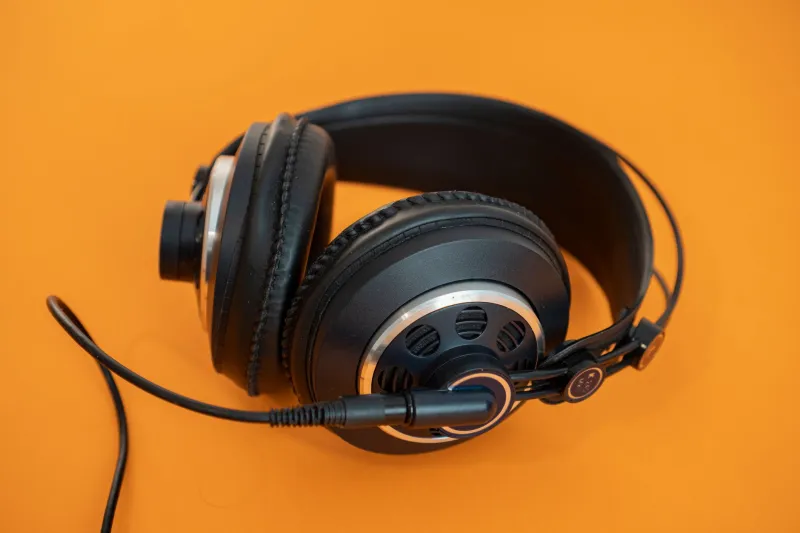
Walk into any serious audio equipment showroom in the United States and ask the salesperson what they put on first when a skeptical customer sits down to audition a pair of $800 headphones. There's a solid chance the answer involves a band from Los Angeles that formed in 1977. Toto doesn't just live in the world of rock radio nostalgia — they live inside the evaluation process that determines whether your next pair of speakers is worth the price tag.
This isn't a coincidence. It's the result of decades of obsessive, almost clinical studio craftsmanship that produced recordings so layered, so dynamically precise, and so sonically wide that they expose weaknesses in audio equipment the way bright sunlight exposes dust on a mirror.
The Recording That Launched a Thousand Listening Tests
If one track gets cited more than any other in audiophile circles, it's "Rosanna." Released in 1982 on the Toto IV album, the song features what's become known as the "Rosanna Shuffle" — Jeff Porcaro's half-time drum pattern that sits at the intersection of groove and precision. But beyond the rhythmic brilliance, the track is a masterclass in spatial audio. The kick drum hits with a weight that separates entry-level equipment from the real deal. The vocal harmonies spread across the stereo field in a way that reveals whether a pair of headphones can actually resolve left-right imaging or just pretend to.
Audio reviewers across YouTube, Reddit's r/audiophile community, and professional publications have independently landed on the same conclusion: if a system can handle "Rosanna" honestly, it can handle most things you throw at it.
Then, of course, there's "Africa." Its omnipresence in pop culture is well-documented at this point, but in audio testing circles it carries a different kind of weight. The opening percussion — those layered mallet instruments and that iconic gated reverb — hits frequencies that stress-test the high-end extension of tweeters and the transient response of drivers. If something sounds brittle or harsh on those opening bars, that's information. Useful, expensive-decision-informing information.
What Engineers Actually Hear
So what is it about Toto's recordings specifically that makes them so revealing? The short answer is intentionality. The band's core members — many of whom were elite session players before Toto existed — understood the recording studio not as a place to capture a performance, but as an instrument unto itself. They worked with producers and engineers who shared that obsession, and the results are records where every element occupies a deliberate place in the sonic spectrum.
The low end on Toto records is particularly instructive for testing purposes. It's tight, defined, and present without being bloated. Budget speakers and headphones tend to either over-emphasize bass to compensate for other weaknesses or lose it entirely in the mix. Toto's recordings sit in that exact zone where the difference becomes immediately obvious. You either hear the bass guitar locking in with the kick drum, or you don't — and if you don't, the equipment is lying to you.
Midrange clarity is another area where these recordings do the work. The vocals on tracks like "I'll Be Over You" and "I'll Supply the Love" sit in a frequency range that's notoriously difficult to reproduce accurately. Too much coloration in the mids, and the warmth of the lead vocals turns into something congested. Too little, and the emotional texture disappears. Toto's recordings are so well-balanced that they function like a tuning fork for midrange accuracy.
Streaming Platforms and the Codec Wars
The conversation around Toto as an audio benchmark has expanded well beyond traditional speaker and headphone testing. As streaming services have battled over lossless audio formats and high-resolution tiers, tech reviewers have increasingly used Toto tracks to illustrate the differences between compressed and uncompressed listening experiences.
The argument goes like this: take a track with significant dynamic range, complex layering, and precise stereo imaging — something like "Pamela" from the 1988 album The Seventh One — and run it through a standard 128kbps stream versus a lossless FLAC file. The degradation in compressed formats becomes audible in ways that simpler recordings might not reveal. The shimmer on the cymbals softens. The spatial separation between instruments narrows. The sense of depth that the original recording captured in the studio partially collapses.
For consumers trying to decide whether a premium streaming tier is worth the extra few dollars a month, Toto tracks have become a practical listening test they can actually perform at home. That's a remarkable position for a band to occupy in the consumer electronics conversation.
The Audiophile Community's Open Secret
Spend any time on audiophile forums — whether that's Head-Fi, AudioScienceReview, or the countless Discord servers dedicated to high-end listening — and you'll find Toto referenced with a frequency that would surprise casual music fans. The band has essentially been adopted by a community that cares far more about signal chain integrity than chart positions.
Part of what makes this interesting from a cultural standpoint is that it's entirely grassroots. No marketing campaign placed Toto in this position. No partnership with a headphone manufacturer made "Rosanna" the de facto test track for dynamic driver performance. It happened organically, driven by listeners comparing notes and arriving at the same conclusions independently across different decades and different formats.
That kind of earned credibility is genuinely rare. Most music used in audio testing is selected because it's familiar, not because it's technically demanding. Toto managed to become both.
Why This Matters for the Band's Legacy
For longtime Toto fans, this dimension of the band's influence adds another layer to an already complicated legacy conversation. They've never quite gotten the mainstream critical recognition their commercial success might have warranted. The Rock and Roll Hall of Fame question comes up regularly in fan communities, and the debate is always spirited.
But there's something quietly powerful about the idea that Toto's recordings are being used right now — today — to evaluate the next generation of audio technology. Every time a reviewer puts on "Africa" to test a new pair of wireless earbuds, or pulls up "Rosanna" to benchmark a streaming service's lossless tier, the band's meticulous studio work gets validated in a very concrete way.
The recordings hold up not because of nostalgia, but because they were made with a level of craft that transcends the era in which they were created. That's not a small thing. In an industry where so much music is produced quickly and compressed for consumption on earbuds that cost less than a dinner out, Toto's catalog functions as a reminder of what recorded music can sound like when nobody cuts corners.
So the next time you're shopping for speakers, breaking in a new pair of headphones, or trying to figure out if that streaming upgrade is actually worth it — you know what to queue up. The band from 1977 has your back.