Before the First Note Drops: Why 'Africa' Is the Sound Engineer's Secret Weapon
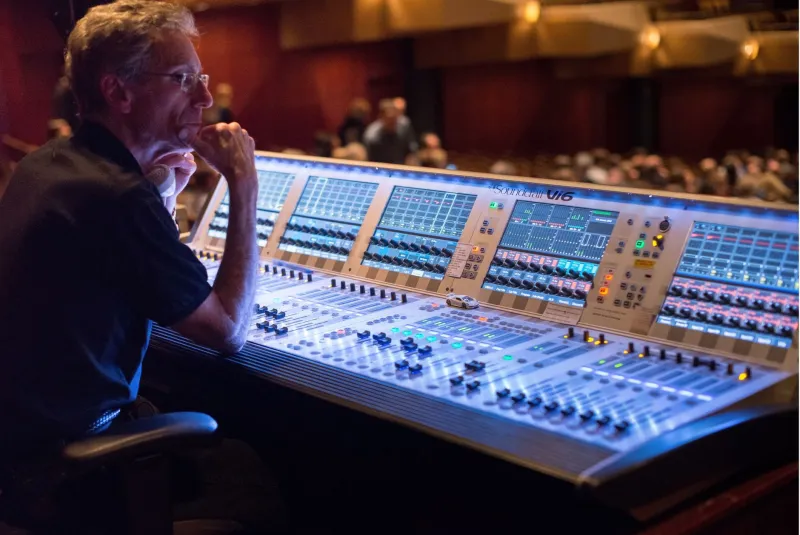
There's a ritual that happens in concert halls, arenas, and mid-sized clubs all across America that most fans never get to witness. The lights are still up. The crowd hasn't arrived. The stage crew is running cables and adjusting monitor wedges. And then, from somewhere in the PA system, a familiar keyboard figure starts to bloom across the room.
It's 'Africa.' Again. Always 'Africa.'
For the uninitiated, it might seem like a quirky coincidence — maybe the engineer just really loves Toto. But spend enough time talking to the people who actually build the sonic architecture of a live show, and you'll learn that this isn't coincidence at all. It's methodology. 'Africa' has become, without any formal decree or industry mandate, the de facto diagnostic track for sound systems across the United States. And the reasons why say everything about what makes that song one of the most brilliantly engineered recordings in pop history.
The Frequency Map Nobody Talks About
Producer and front-of-house engineer Marcus Dell, who has worked venues from Red Rocks Amphitheatre in Colorado to the Ryman Auditorium in Nashville, puts it plainly: "That song is basically a frequency map. From the low-end thump of the kick drum to the shimmer of the hi-hats, and then all that vocal layering in the middle — it covers almost every range I need to test in about four minutes."
That's the thing about 'Africa' that casual listeners rarely stop to appreciate. The track, recorded in 1982 at Sunset Sound in Hollywood, was built by some of the most technically gifted session musicians and producers in the business. Jeff Porcaro's drum work sits in the mix with a particular weight and clarity that makes imbalances in a PA system immediately obvious. If the kick is muddy, you'll know. If the low-mid frequencies are fighting each other, 'Africa' will tell on the room before the headlining act ever walks out.
David Paich's layered keyboards occupy a wide swath of the sonic spectrum, creating what engineers describe as a "busy middle" — exactly the kind of frequency congestion that exposes weaknesses in cheaper or poorly tuned systems. A venue's speakers either handle that complexity cleanly, or they don't. There's no hiding from it.
Vocals That Were Built to Be Tested
Then there's the vocal arrangement. Joseph Williams and the layered backing vocals on 'Africa' represent what sound engineers call a "stacked challenge." You've got lead vocals sitting in a particular frequency pocket, harmonies stacked above and below, and all of it needs to cut through an already dense instrumental backdrop without getting lost or turning harsh.
"I use it specifically to check vocal clarity," says Renee Castillo, a monitor engineer based out of Austin who has worked everything from ACL Fest to intimate club runs. "If I can hear every word of the chorus clearly and the harmonies aren't smearing together, I know my system is dialed in. If something's off, 'Africa' will catch it every single time."
This is not a small thing. Vocal intelligibility is one of the most common complaints from concertgoers, and it's one of the hardest problems to diagnose quickly. Engineers need a reference track with a known, predictable vocal mix — something they've heard hundreds of times on well-tuned systems — so they can compare what they're getting in an unfamiliar room. 'Africa' has become that reference point for a generation of live sound professionals.
The Familiarity Factor
There's also a psychological component that engineers are surprisingly candid about. Part of what makes a good reference track useful is that you have to know it cold. You need to have an internal model of what it's supposed to sound like so you can immediately identify when something's wrong.
"I've heard 'Africa' on probably a thousand different systems," says Dell. "I know what the snare should sound like. I know where the bass sits. I know when something's not right because I've got the correct version burned into my memory. You can't say that about a song most people have only heard a few times."
This is where Toto's cultural omnipresence actually becomes a technical asset. Decades of radio play, movie soundtracks, meme virality, and streaming have made 'Africa' one of the most recognizable and widely heard recordings in American popular music. Sound engineers grew up with it. They've heard it in cars, in grocery stores, at parties, through good headphones and terrible laptop speakers. That accumulated listening history gives them an unusually precise internal reference.
What the Room Reveals
Beyond the frequency testing and vocal checks, 'Africa' also functions as a room diagnostic in a broader sense. The track has a specific dynamic shape — it builds, it breathes, it has quiet passages and fuller moments — that helps engineers understand how a space handles dynamic range. Some rooms compress everything into a wall of sound. Others let dynamics breathe naturally. Knowing which situation you're dealing with before the show starts is crucial.
The song's stereo imaging is also a factor. The original recording makes deliberate use of the stereo field, placing different elements in different positions across the mix. When played through a well-configured PA system, those spatial relationships hold. When something's misconfigured — a speaker cluster that's out of phase, a delay stack that's mistimed — the imaging collapses in ways that are immediately audible to a trained ear.
"It's like a checklist that plays itself," Castillo says. "Low end, check. Midrange clarity, check. High-frequency detail, check. Vocal intelligibility, check. Stereo imaging, check. You get all of that in one song."
The Toto Standard
What's remarkable about all of this is that it happened organically. No industry body voted 'Africa' into this role. No manual recommends it. It spread the way most genuinely useful things spread in professional communities — through word of mouth, through shared experience, through one engineer mentioning it to another until it became common practice.
And it reflects something important about the original recording. The fact that 'Africa' works this well as a diagnostic tool isn't accidental. It's the direct result of the obsessive production standards that Toto brought to everything they made. Greg Ladanyi and David Paich produced a track that was so well-balanced, so thoughtfully constructed across the frequency spectrum, that it essentially became a benchmark — a document of what a great-sounding record is supposed to sound like.
For Toto fans, there's something deeply satisfying about this. Long before the memes, long before the streaming numbers, long before Gen Z discovered the band on TikTok, 'Africa' was already doing important work in the background — helping engineers make sure every show, for every artist, in every venue, sounded as good as it possibly could.
The song that plays before the show starts might just be the most important performance of the night. And more often than not, it's Toto setting the standard.