Blueprint in the Headphones: How Toto's Studio Obsession Changed the Way We All Record Music

Pop on a decent pair of headphones and queue up Toto IV. Give it thirty seconds. There's a moment — usually somewhere in the opening bars of 'Rosanna' — where something clicks. The kick drum sits in a pocket that feels almost physically present. The guitars breathe without crowding. The keyboards occupy their own lane without apology. And somehow, everything is exactly where it should be.
That's not an accident. It's the result of a band that treated the studio like a second instrument — and in doing so, they accidentally handed the rest of the music world a masterclass in how to record.
The Studio as Laboratory
By the time Toto started tracking their debut album in 1977, the members had already logged more studio hours than most bands accumulate in a career. David Paich, Steve Lukather, Jeff Porcaro, and the rest of the crew were the go-to session players in Los Angeles, backing everyone from Boz Scaggs to Steely Dan. That wasn't just a paycheck — it was an education.
Working alongside producers like Tommy LiPuma and engineers who obsessed over mic placement and signal chain gave Toto a vocabulary for sound that went far beyond chord changes and melody. They understood why a room sounded the way it did. They knew what happened when you changed the attack on a compressor by a few milliseconds. That kind of knowledge doesn't stay locked in the big commercial studios forever — it trickles down, and in Toto's case, it trickled down through their records.
What Made the Sound So Transferable
Here's the thing about Toto's production approach that makes it particularly useful for home recordists: a lot of what they did was about restraint. Unlike some of their contemporaries who piled on effects and reverb until everything sounded like it was recorded in a cathedral, Toto understood negative space.
Jeff Porcaro's drum sound on Toto IV is a perfect case study. Rather than drowning the kit in room reverb — which was fashionable at the time — engineer Al Schmitt worked with Porcaro to get a sound that was tight, controlled, and punchy. The result was a drum tone that translated beautifully on smaller speakers, which is exactly the problem home studio producers wrestle with every single day. If your mix sounds good on a laptop speaker, you've done something right. Toto figured that out early.
Steve Lukather's guitar tones follow a similar logic. Clean when clean was needed, gritty when the song called for it, but never fighting for space with the keyboards. In an era when guitarists were notorious for turning everything up to eleven, Lukather consistently played for the song. That philosophy — serve the track, not your ego — is the first thing any decent recording engineer will tell a young musician today.
Albums That Engineers Still Reference
Ask around in any serious home recording forum or producer community, and certain Toto records come up again and again as reference material. Toto IV is the obvious one, and for good reason — it won a stack of Grammys and still sounds cleaner than a lot of modern records. But Fahrenheit (1986) and The Seventh One (1988) are increasingly cited by producers who are chasing that specific blend of warmth and clarity that sits somewhere between analog and digital.
The transition Toto made through the mid-eighties — from pure analog tape to hybrid digital workflows — puts their catalog in a uniquely instructive position. You can almost hear the learning curve in real time across those records, and for home producers navigating the same analog-versus-digital debate on a much smaller budget, there's genuine wisdom in studying how Toto handled it.
Engineers who have worked in LA studios over the past few decades will often describe pulling out a Toto record as a calibration exercise — not just for the technical specs, but for the emotional register. A mix that feels good and sounds good at the same time is harder than it looks, and Toto managed it consistently.
Techniques You Can Actually Steal
So what does any of this mean for someone recording in a spare bedroom or a converted garage? More than you might think.
Layering with intention. Toto was famous for stacking keyboard parts, vocal harmonies, and guitar tracks — but every layer had a defined role. Before you add another track to your session, ask what it's doing that nothing else is already doing. If you can't answer that question, you probably don't need the layer.
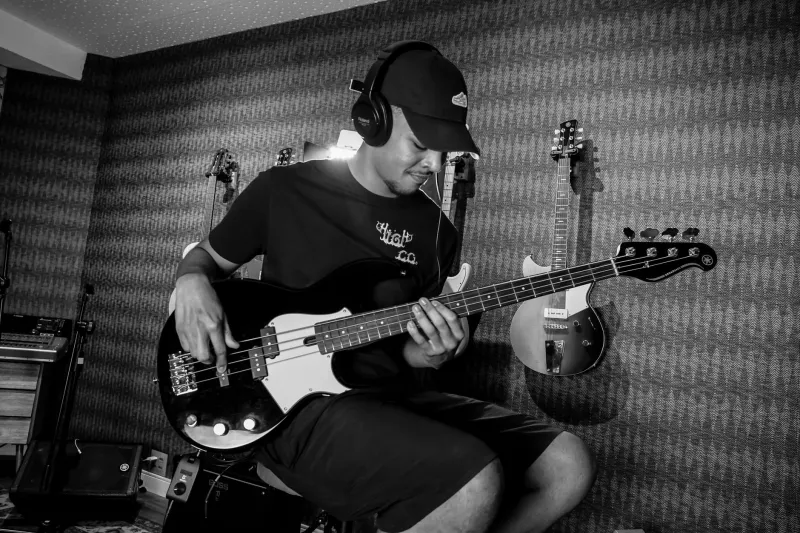
Committing to your tones early. The band made decisions at the source — getting the right sound out of the amp or the synth before it hit tape, rather than planning to fix it later. In a home studio context, this means spending more time dialing in your instrument and less time reaching for plug-ins to compensate.
Listening on multiple playback systems. Al Schmitt and the engineers behind Toto's classic records were notorious for checking mixes on everything from studio monitors to car speakers. You should be doing the same thing with earbuds, phone speakers, and whatever ancient Bluetooth speaker your roommate left in the kitchen.
Dynamic range as a tool, not an afterthought. Toto's records breathe. The quiet parts are genuinely quiet, which makes the loud parts land harder. In the age of loudness wars and hyper-compressed streaming masters, this is a lesson worth revisiting constantly.
Why It Still Matters
The irony of Toto's influence on home recording is that the band itself worked in some of the most expensive, well-equipped studios in the world. Village Recorders, Cherokee Studios, Record One — these weren't exactly budget operations. And yet the principles behind what they achieved are completely scalable.
That's the thing about great technique: it doesn't care about your budget. Understanding why a mix works, why a tone cuts through, why a rhythm part locks with the bass — that knowledge translates whether you're behind a $200,000 SSL console or a secondhand audio interface plugged into a MacBook.
For a generation of home producers who grew up listening to 'Africa' on repeat and then started wondering how that record actually got made, Toto's catalog is an open textbook. The answers are right there in the grooves — or the files, depending on how you're streaming it.
Put the headphones back on. Press play. And this time, listen like you're trying to learn something. Because you are.